The Grid Cannibal
AI compute is eating the same grid that protects communities from heatwaves and fires. The deal is being cut by contract, not by vote — and the people on the other end aren't in the room.

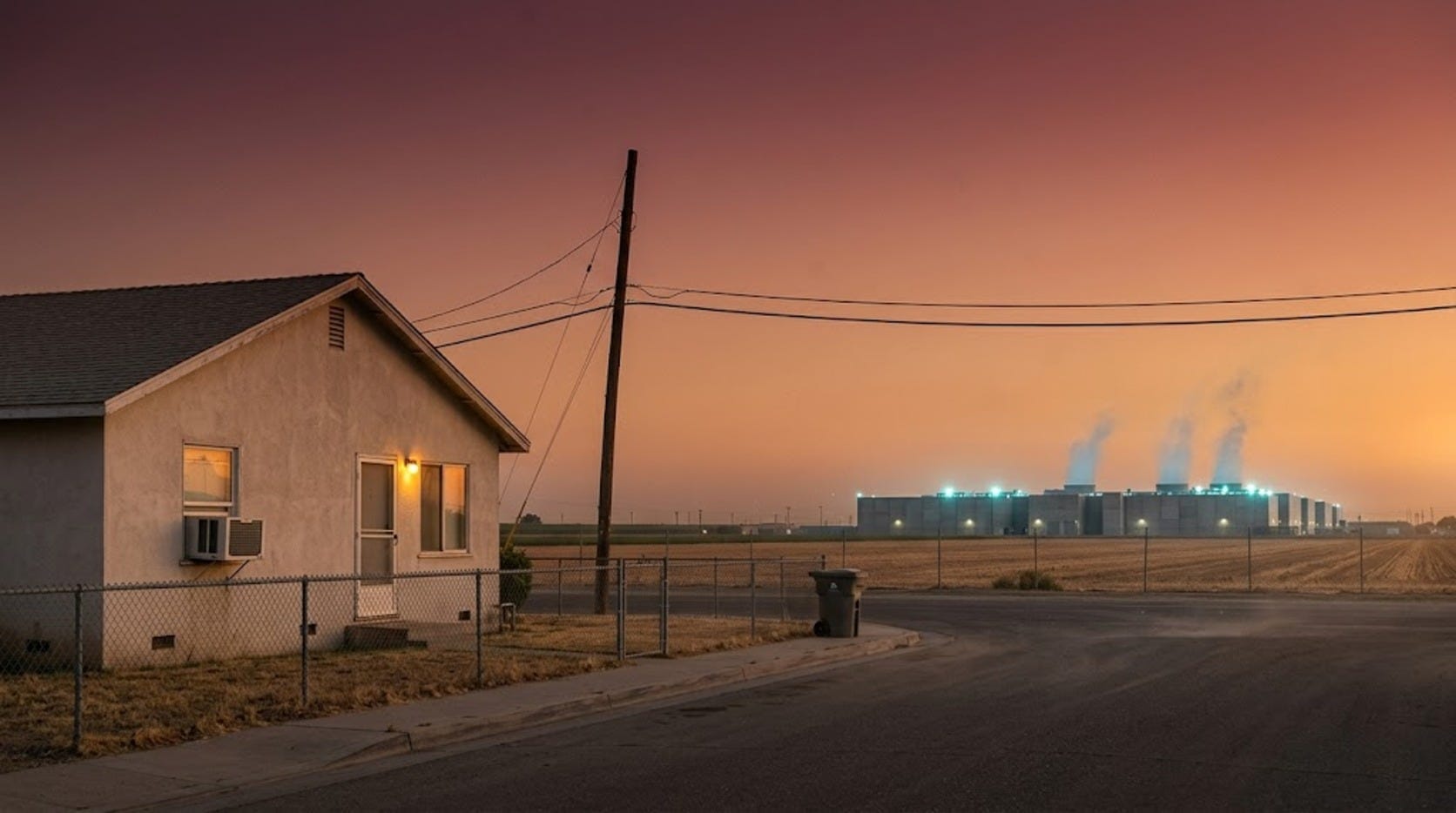
She is eighty-seven years old, lives alone in a single-story stucco house in a Central Valley town she has never left, and runs one window air conditioner in the bedroom from late June through September. The house is paid for. The Social Security check is not enough to run two units. Her granddaughter checks on her by phone twice a day during heat events because the granddaughter cannot get there in less than ninety minutes.
Last August, during the third afternoon of a four-day heat dome, the lights went out at 3:47 p.m. The grid operator's curtailment list had reached residential customers at her substation. Two miles away, behind a chain-link fence and a row of new conifers, a 320-megawatt data center campus that had broken ground sixteen months earlier kept running. The campus was on a behind-the-meter generation contract that exempted it from the same curtailment hierarchy that turned off her air conditioner.
The window unit was off for four hours and twenty-two minutes. The bedroom temperature reached 104. She was conscious when the granddaughter arrived. She is alive. Other people in similar situations, in similar towns, are not.
This is a composite. The structural facts are real.
Keep reading with a 7-day free trial
Subscribe to Nate Wittasek, P.E. to keep reading this post and get 7 days of free access to the full post archives.